

In this article
- How to choose the right smoking wood
- How to smoke food on a charcoal grill, gas grill, or ceramic grill
- The difference between clean smoke and dirty smoke
Introduction
Barbecue isn’t just about fire, it’s about smoke. That curl of fragrant wood smoke drifting from your pit isn’t just for show, it’s flavour, it’s seasoning, it’s history, and it provides character.
How to choose the right smoking wood
Every wood has its own flavour profile. Some are mild and sweet, perfect for poultry and vegetables. Others are intense and bold, made for brisket or ribs. The key is matching the wood’s strength to your ingredient.
Remember, you can layer woods much like rubs. For example, with brisket you may want to use 2 parts oak and 1 part cherry. The oak delivers the flavour and the cherry adds some sweetness as well as some colour.
- Best smoking wood for chicken and poultry: Applewood, cherry, maple, alder
- Best for seafood: Applewood, maple, alder
- Best for lamb: Oak
- Best for pork: Applewood, cherry, maple, pecan
- Best for beef: Cherry, hickory, oak
- Best for vegetables: Applewood, pecan, alder
- Best for cheese: Cherry, hickory, pecan
How to use smoking wood
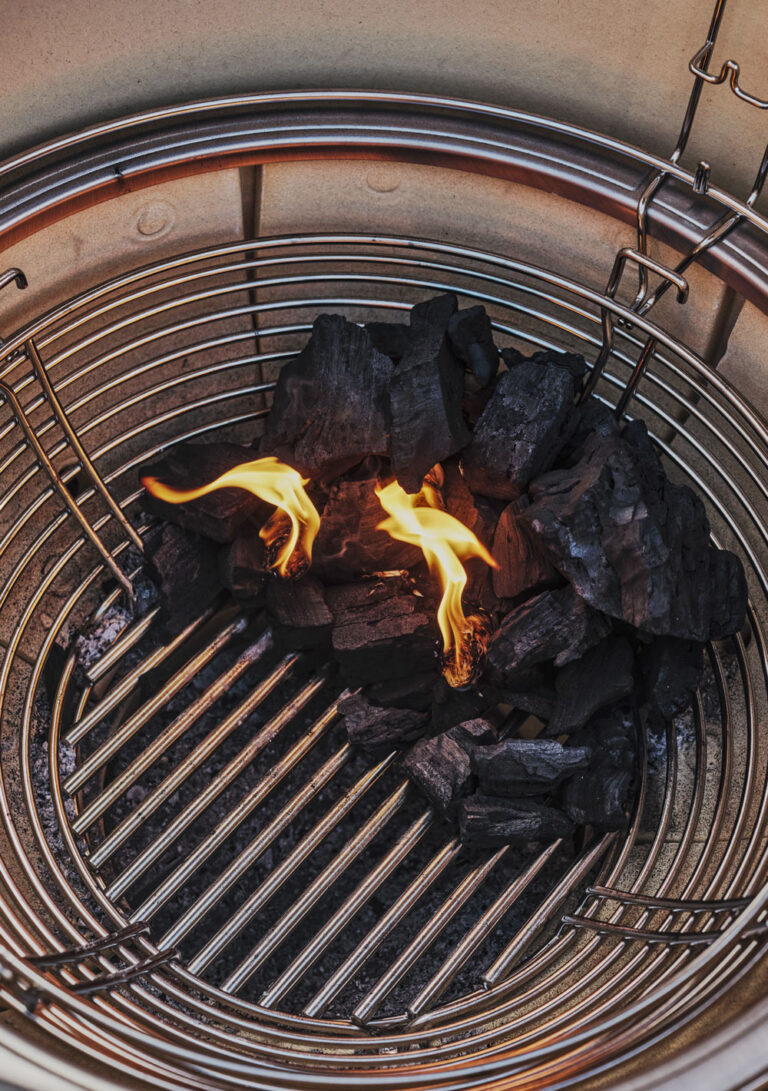
If using a charcoal grill: Toss one or two fist-sized wood chunks directly onto the hot coals. For longer cooks, use more chunks and bury them in the coals prior to lighting.
If using a gas grill: Use a smoker box or foil pouch filled with chips. Place it over a lit burner on low.
For kamado and ceramic grills: Add wood chunks as above to the charcoal for steady, even smoke. If you need to add extra mid-cook, place smaller chunks into the ash tray.
Pellet smokers: Use the right pellets for your protein – fruit woods for poultry and pork, hardwoods for beef and game (see above).
Clean vs. dirty smoke
If you’ve ever had a barbecue that tasted acrid, bitter, or like licking a chimney, chances are it was hit with dirty smoke. It’s one of the most common mistakes when using wood – and one of the easiest to fix once you know what to look (and smell) for.
Know the difference – it can make or break your barbecue.
Clean smoke
- Appearance: Thin, wispy, almost blue or transparent.
- Smell: Pleasant, sweet, woodsy.
- Taste: Enhances the natural flavour of the meat without overpowering it.
- Result: Bark forms beautifully, meat stays juicy and the smoke ring pops.
How to achieve clean smoke:
- Use well-seasoned (dry, but not dusty) hardwood.
- Ensure good airflow – smoke needs oxygen.
- Maintain stable temperatures and avoid overloading with wood.
- Let the fire breathe, don’t smother it with too much fuel too quickly.
Dirty smoke
- Appearance: Thick, white or grey plumes.
- Smell: Acrid, sharp, chemical-like.
- Taste: Bitter, burnt, unpleasant coating on the tongue.
- Result: Blackened bark, dry or tough meat and a ruined cook.
What causes dirty smoke:
- Wet or green wood.
- Poor airflow and smouldering fires.
- Too much wood dumped onto an underdeveloped fire.
- Grease hitting open flames and creating smoke (particularly in offset smokers or kettles).