

In this article
- Introduction
- Charcoal
- The best charcoal for different ingredients and methods
- Charcoals to avoid
- Combining charcoal and wood
- More barbecue tips
Introduction
Charcoal and wood are not just fuel sources, they are essential seasonings; they add their subtle flavours and colour to the food we cook. That is part of the enjoyment. Simple changes can transform recipes, and I encourage you to do that as you progress.
Charcoal
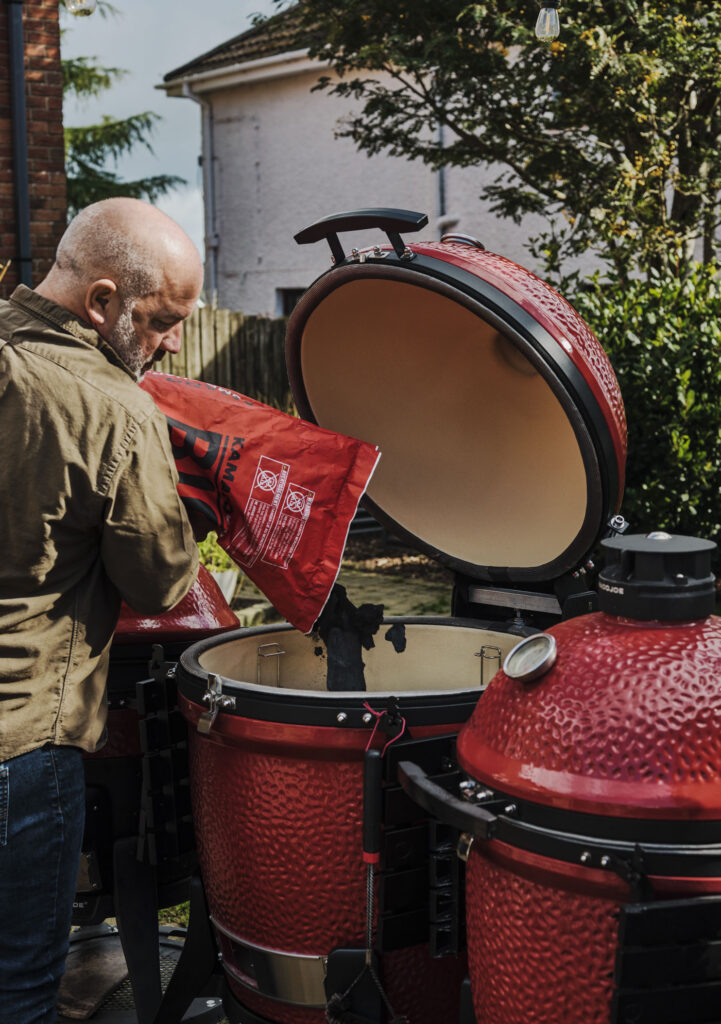
Charcoal’s been around for thousands of years, used for smelting metals, heating homes and, yes, cooking meat over fire. That same method still fuels modern barbecue pits today, from the back gardens of Belfast to the brisket joints of Texas.
Charcoal isn’t just a fuel, it’s the foundation. Whether you’re chasing the bark on a brisket or flash-searing a steak, the way you build your fire determines the success of your cook. So, take a minute to choose your charcoal, stack it with purpose, and let the flames work their magic.
There are lots of different types to choose from, so I’ve listed them below along with their pros, cons and what I consider them to be best used for, or when they should be avoided.
Briquettes
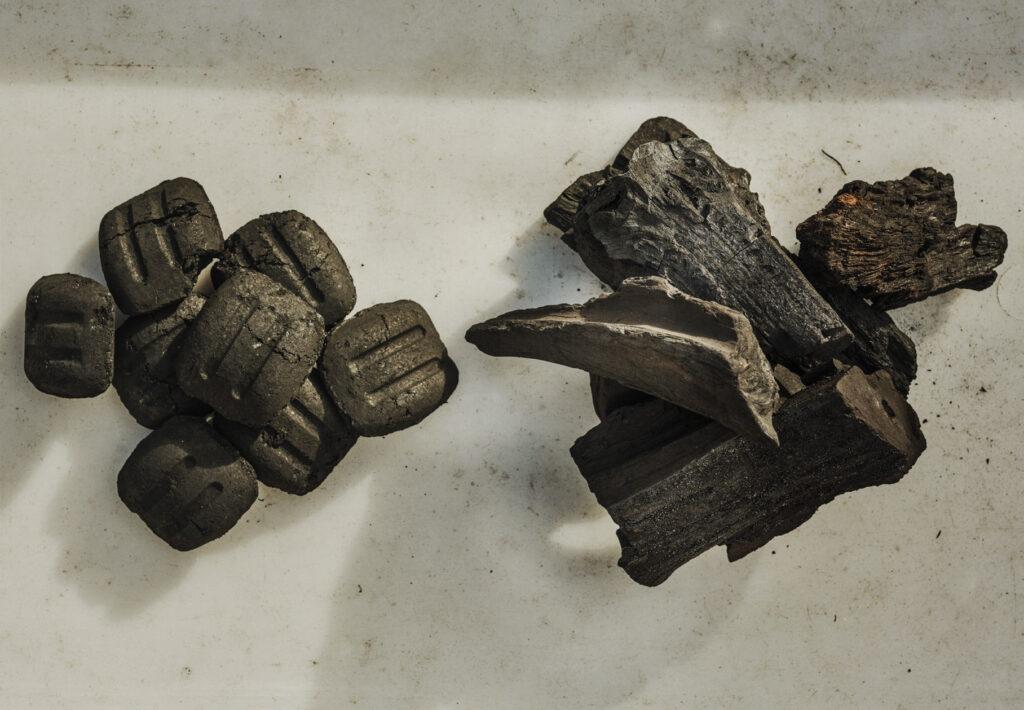
Briquettes are the most commonly used charcoal type and are readily available at most stores and supermarkets. They aren’t all created equal, so look for those marked as natural or all-natural. Briquettes are usually uniform in shape and provide a consistent, even burn, often over 1–3 hours. Their regular size and shape enable even heat distribution, making them a solid choice for beginners and various grilling methods, including low and slow barbecuing.
Avoid using briquettes in ceramic grills, purely due to the volume of ash they produce, which could affect the airflow.
Pros
- Even, consistent burn.
- Long-lasting heat.
- Cheap and widely available.
Cons
- Slower to light.
- More ash production.
- Some brands contain fillers, chemicals or starch-based binders.
Best for: Long cooks, kettle grills and offset smokers.
Lump charcoal
Lump charcoal consists of whole pieces of wood subjected to high heat to create a clean burn. As a natural product, the size may vary, which can lead to uneven heat distribution. However, lump charcoal burns hotter than briquettes, making it ideal for high-temperature grilling. The average burn time would be around 1 hour if the airflow is not constrained. It is also easier to light than briquettes.
Pros
- Burns hotter.
- Lights faster.
- Leaves less ash.
- No additives or binders.
- Reacts quickly to airflow adjustments (great for kamado and ceramic grills).
Cons
- Burns quicker.
- Irregular sizes can lead to inconsistent heat.
- Can be pricier than briquettes.
Best for: Fast sears, open-fire grilling, ceramic barbecues, like the Kamado Joe.
The best charcoal for…
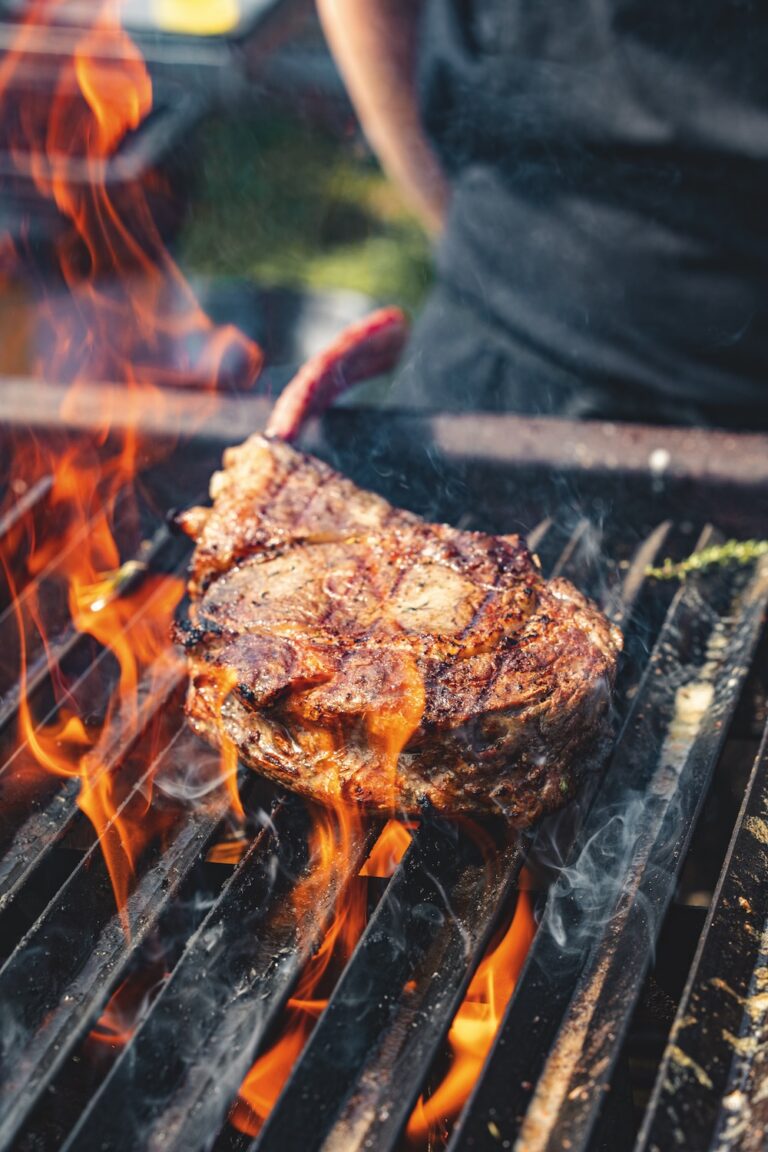
- Searing steaks: Lump charcoal for high heat
- Low and slow brisket: Briquettes with wood chunks
- Kamado-style grilling: Lump charcoal for airflow control
- Burgers and sausages: Lump charcoal or briquettes – go with what you’ve got
Charcoals to avoid
1. Quick-light charcoal / lighter fluid
The simple advice from me for this fuel type is – don’t even go there! Often labelled as ‘match light’ or ‘quick light’, this type of charcoal is treated with a flammable chemical. It can impart an undesirable flavour to your food. In a ceramic barbecue, this aroma could remain in the pores of the ceramic for a very long time.
2. Instant-light briquettes
These are soaked in lighter fluid and give off a chemical smell that hangs around in your food. Avoid, unless you’re after that petrol-smoked flavour.
3. Unlabelled bulk charcoal
If you don’t know what’s in it, don’t burn it under your food.
4. Anything that doesn’t say ‘natural’ in the title
These will invariably have chemicals either for transport to prevent combustion or other nasties we don’t want.
5. Charcoal with ‘flavour enhancers’
These are often synthetic and unnecessary – stick to wood for your smoke.
Pro tips for charcoal cooking
- Build a two-zone fire: (Direct and indirect): hot side for searing, cooler side for finishing. Essential for control.
- Use a chimney starter: Skip the lighter fluid – get your coals roaring naturally in 15–20 minutes.
- Top up mid-cook: Add lump charcoal carefully during long cooks – it lights quicker and won’t stall your fire.
- Control the fire with air, not fuel: Adjust vents, not charcoal piles, to dial in temperature.
Should you let charcoal ash over?
This isn’t required with natural charcoal; this was invariably the advice in years gone by, but it was more specially aimed at giving the coals time to burn off any chemicals. Don’t cook until the coals are well established, but they don’t have to be grey-white and glowing. We control our fire with oxygen and volume of fuel. We master the fire, we don’t let the fire master us.
In addition to the control methods for the fire we also have our zones – and remember, we may want to add more fuel as we go, if needed.
Combining charcoal and wood
One of the best barbecue secrets? Layer lump charcoal with chunks of hardwood. You get the heat from the charcoal and the flavour from the wood, but you also get control and character, all in one cook.
If you’re new to this, a great entry-level way into wood smoking is to combine lumps of wood with your charcoal cook. Here are a few of my favourite combinations:
- Oak or hickory + charcoal = Brisket magic
- Applewood + charcoal = Perfect pork chops
- Pecan + charcoal = Smoked duck gold
Using wood chunks with charcoal in the barbecue
What size of wood chunks should I use?
Use fist-sized chunks (approximately 5–7.5cm/2–3in wide) when mixing wood with charcoal. Smaller chunks can burn too quickly; larger chunks may produce excessive smoke.
What is the best time to add wood chunks?
Add wood chunks just before placing food on the grill, when the charcoal is fully lit and burning steadily. This maximises smoke flavour, as raw meat absorbs smoke better at the beginning of the cook.
How many chunks for subtle flavour?
Using 1–2 fist-sized wood chunks will give a gentle, subtle smoke profile that’s ideal for poultry, fish or vegetables. Using more than 3 chunks may overpower delicate meats.
Crucial tips for best results
- Placement: Position wood chunks directly on top of lit charcoal, evenly spaced out, to maintain consistent smoke.
- Avoid over-smoking: Too much smoke can add a bitter taste. Subtlety is key – less is often more.
- Lid on: Always grill with the lid closed, to retain smoke and flavour.
- Soaking not required: Wood chunks don’t need soaking. Dry wood produces cleaner smoke.
- Quality matters: Use hardwood chunks like oak, apple, cherry or hickory for the best flavour results.