





Feed your appetite for cooking with Penguin’s expert authors
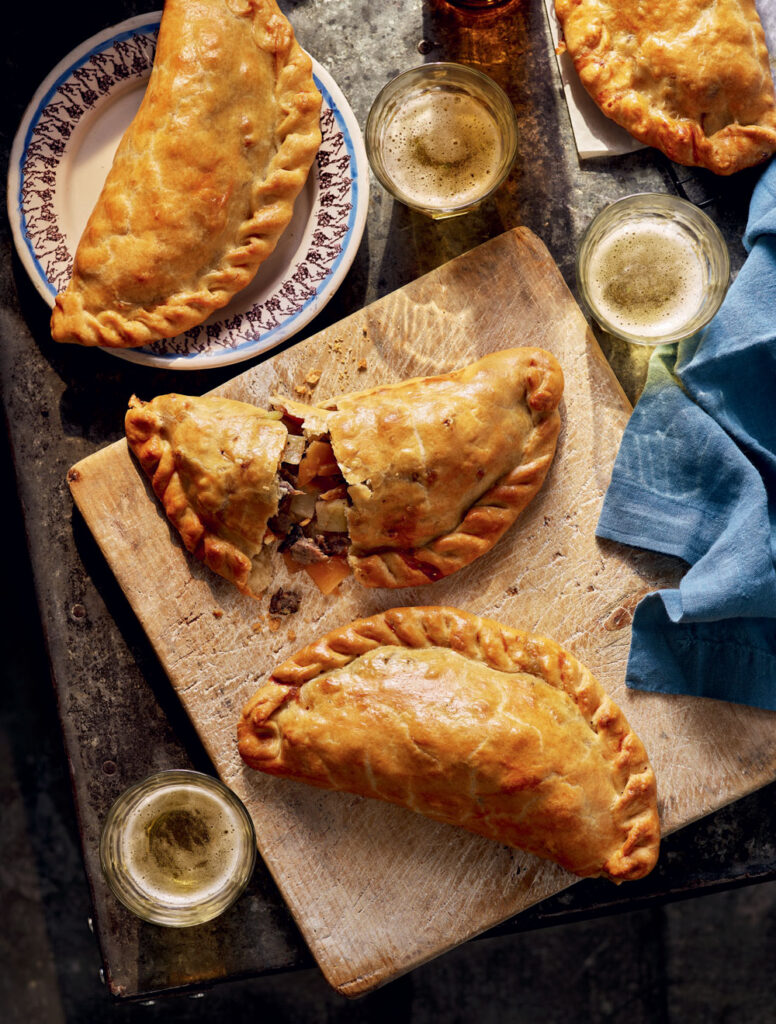
Rick Stein’s Cornish Pasties


Introduction from Rick Stein
I like to use butter and lard for the pastry, as this does create a great texture. Grating the lard and butter means that the pastry is flecked with streaks of the fat, giving a lovely flaky result. Traditionally, Cornish pasties don’t contain any stock – the juiciness in them derives from the connective tissue slow-cooking beef skirt or chuck provides. In fact, though one might be tempted to give pasties more gravy by adding stock, they don’t taste like the real thing. I say this because I had a Cornish pasty in Australia recently and it tasted like an Aussie meat pie, albeit in a pasty shape. And the beef was minced.
Ingredients
Method
Put the lard and butter for the pastry in the freezer and leave until they are very hard.
Meanwhile, prepare the filling. Trim any gristle off the meat. Cut the meat and any fat into 5mm pieces. Peel and chop the swede into similar-sized pieces. Slice the potatoes and chop the onion or shallot, then mix all the filling ingredients together in a bowl. Season with plenty of salt and pepper.
For the pastry, sift the flour and salt into a large bowl, then grate the lard and butter, straight from the freezer, into the bowl. Gently mix the fat through the flour, then using a table knife, stir in the water a tablespoon at a time until the mixture comes together. Turn the dough out on to a lightly floured surface and briefly knead into a ball. Put it back in the bowl, cover and chill for an hour.
Preheat the oven to 180°C/Fan 160°C. Cut the pastry into 4 even pieces and shape each into a ball. Roll them out, one at a time, on a floured surface into circles 20–23cm in diameter. The pastry should now be the right thickness, about 3–4mm. Place an up-turned plate of that size on each circle and trim into neat rounds.
Divide the filling between the rounds, then seal and crimp – see instructions below. Grease and flour a large baking sheet. Brush the pasties with beaten egg or milk and place them on the baking sheet, leaving 5cm between each one. Bake for 1 hour.
Crimping a Cornish pasty
Roll the pastry out into a disc about 20–23cm in diameter and pile the filling in the centre. Very lightly brush the edges of each disc with water.
Bring the edges together and press firmly, particularly at each end. This is important to
stop the filling coming out while cooking.
Working from right to left (or left to right if left-handed), place a thumb on the edge and pull the dough over it, then press.
Continue moving your thumb along, pulling and pressing the dough to create a rope-like crimp to seal the pasty. Tuck the ends in well. Chill for about an hour.
You might also like



Reviews
Have you tried this recipe? Let us know how it went by leaving a comment below.
Our team will respond to any queries as soon as we can - this may take longer over weekends. You do not need to resubmit your comment.
Please note: Moderation is enabled and may delay your comment being posted. There is no need to resubmit your comment. By posting a comment you are agreeing to the website Terms of Use.