

In this article
Introduction
Grilling is a wonderfully intuitive way to cook and can bring extraordinary flavour and texture to the most humble of ingredients. In my cookbook BBQ, you’ll discover how to make vegetables sing with crispness and sweet char, you’ll find new wonder in delicately smoking and steaming fish, you’ll meet beautiful burgers – but not as you know them – and you’ll uncover an array of wonderful ways to accent, grill and serve up cuts of meat. I’ve also included a handful of irresistible brunch bits, and those all-important supporting-actor recipes that help to make your whole barbecue experience.
If you’re a beginner barbecuer, you’ll find that with a bit of know-how, curiosity and courage, you can craft all sorts of remarkable meals.
How to set up your grill
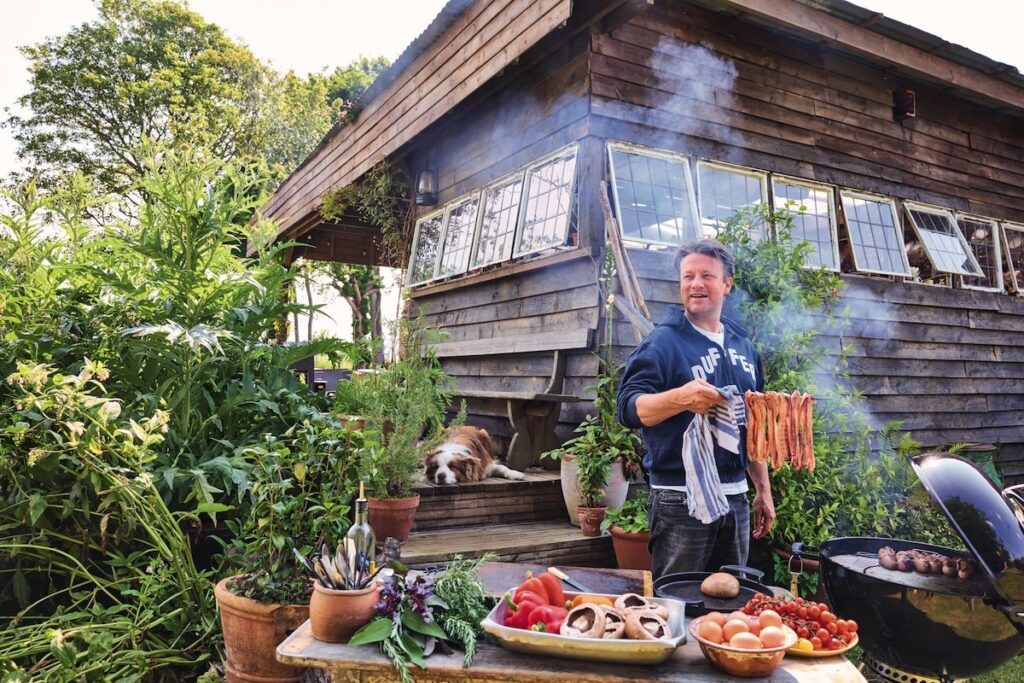
Getting your barbecue area in order before you start cooking is key in setting you up for success. For me, the skill comes from being organised, planning ahead and understanding the core techniques and protocols that will serve you well. So, take a moment to think about what you’ll be cooking and what equipment you’ll need, meaning you can focus on the grilling, rather than running around in a panic looking for things!
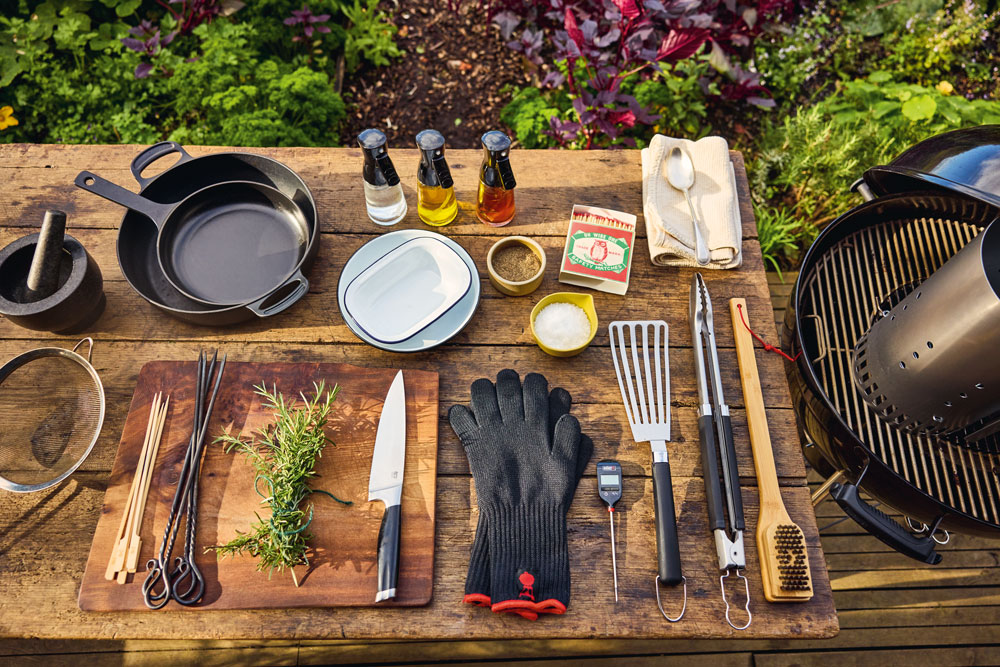
I find it helpful to have a fold-out table, chair or crate on either side of the barbecue: one for raw ingredients and food that’s prepped ready to cook, and one for your cooked stuff, so you can keep things organized and avoid cross-contamination.
Remember, every barbecue is different, and the perfect ‘set-up’ is the one that makes it the easiest and the safest for you. Don’t worry what it looks like – if it works, it works!
BBQ prep equipment
- Matches and natural firelighters to get things going
- Wood chips for adding extra smokiness and depth of flavour
- Long-handled tongs to put things safely on the grill and turn them while cooking
- Gloves to protect your hands from the heat
- A chopping board and chef’s knife for easy prep
- Sea salt and black pepper for seasoning
- Olive oil, red wine vinegar and water in spritz bottles, allowing you to be
attentive to your food as it cooks and have control of how much you use
BBQ cooking equipment
- A digital food thermometer to ensure your chicken and meat is perfectly cooked
- Long-handled tongs or a spatula to remove cooked food from the grill
- Serving boards and platters ready to dish up
- Extra virgin olive oil, for finishing dishes
- Staple pantry items olive oil, extra virgin olive oil, red wine vinegar, sea salt and
black pepper pop up regularly but aren’t included in individual ingredients lists
Also good practice to have
- A decent grill brush to use before, during and after cooking
- A bowl of hot soapy water to keep your hands clean
- A bin or rubbish bowl to keep any waste in one place
- A fire extinguisher or fire blanket, to be safe
Additional equipment I recommend
- A chimney starter
- Long metal or wooden skewers (just remember to soak wooden skewers
before use, to prevent them burning when on the grill) - Cast-iron pans, particularly a shallow casserole pan, a large deep pan
and a small frying pan - Enamel trays and bowls that you can put directly on the grill
Which is better: charcoal, gas or electric?
I’m a big fan of cooking over fire, so a charcoal barbecue will always win out for me. Once you get to know your barbecue and get in the zone, you’ll find it’s easy to use and a fairly clean heat source without too much smoke. Please choose sustainably and ideally locally sourced charcoal or briquettes with no nasties. Generally, the better the quality, the longer the coals will burn for, so it’s worth upgrading if you can.
Gas can be very convenient: just turn it on, let it preheat, and go, and it can be a more sustainable option than charcoal. If cooking on gas, use the temperature knobs to adjust the heat across your grill to create hot, medium and cool zones that echo different charcoal set-ups. If you want to add wood chips to your gas barbecue to create smokiness, simply use a smoker box or metal tray placed directly on the bars of the grill.
Finally, there are electric barbecues, which definitely seem to be on the up. They’re the most sustainable option of all and can be very helpful if you live somewhere with limited outside space.
How to start a charcoal grill
With charcoal barbecuing, I really recommend using a chimney starter – it will make your grill life a lot easier. Chimneys are useful as they mean you can light your coals in an even way, but also because they light quickly. I find it easiest to remove the grill from the barbecue, sit the chimney inside over a lit firelighter, and start it there.
Once the coals are glowing amber at the top, carefully tip them out and use a grill brush or long-handled tongs to drag or push the hot coals to exactly where you want them. Put the grill back over the coals, and put the hot chimney somewhere safe to cool down.
Once the coals and grate are in place, I like to pop the lid on for 5 minutes before I start cooking – I find it helps the bars of the grill to heat up.
Use the vents for heat control
You’ll see that often in recipes where you cook with the barbecue lid on, I also say to have the vents open. The vents are there to help you regulate the airflow in your barbecue – the ones at the bottom let air in to fuel the fire, and the ones at the top allow heat to escape. Having the vents open means you get a stronger heat, speeding up your cooking.
Occasionally I recommend having the top vent only half open – this is generally for instances where it is helpful to keep the coals going for longer, like slow-cooked meats. Where possible – and this will vary from model to model – it’s good practice to have the vents open on the opposite side to the hot coals.
How to clean and maintain your grill
It’s important to give your grill a bit of love, and that means investing in a good barbecue brush and using it before, during and after grilling to keep the bars clean and prevent whatever it is you’re cooking from sticking. Don’t skip this step!
Good practice for charcoal barbecuing
Once you’ve finished grilling, close the vents to stop the coals or briquettes burning. Next time you fill your chimney starter, knock any ash off the outside of these half-used coals or briquettes and add them in with the fresh ones to light and use again. This saves waste and a bit of money, too!
Before you light the chimney, clear out any old ash from the base of your barbecue – you don’t want to get a build-up there as it can block the air vents, affecting the airflow and success of your grilling.
Ready to get grilling? Click here to preview some of our favourite recipes from BBQ by Jamie Oliver.